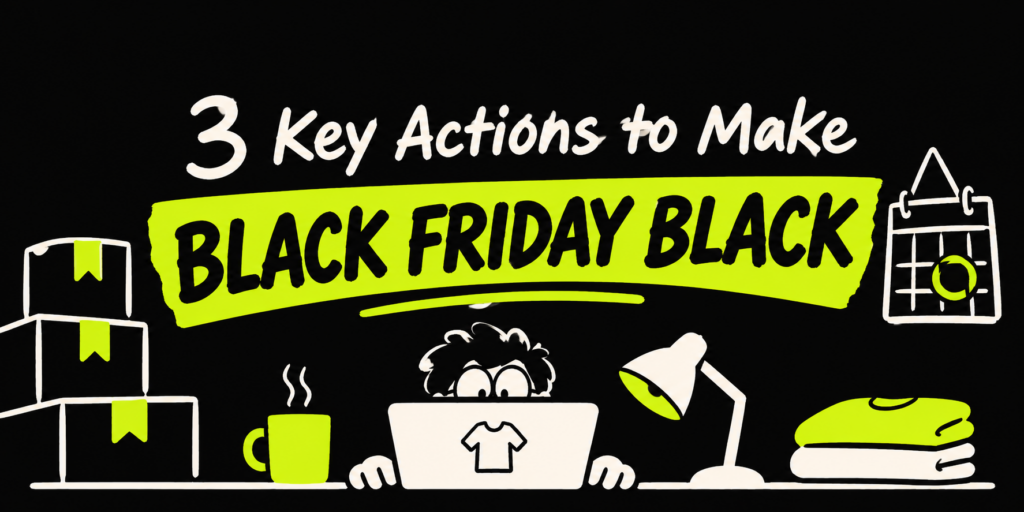
In accounting, “in the black” means you’re profitable. A Black Friday black is a sale that still leaves money on the table after discounts, ad spend, shipping, and returns. Plenty of brands have a loud Black Friday and a quiet bank balance by Monday.
The numbers are big, and they keep growing. Adobe reported a record $11.8 billion in US online spending on Black Friday 2025, up 9.1% year over year, inside a $44.2 billion Cyber Week. It was also the second season in a row where Black Friday growth outpaced Cyber Monday, as shoppers embraced early, competitive deals.
Here are three actions that keep you on the right side of that line.
1. Decide between stocking up and on-demand
This is the first call you make, because it sets your risk for the whole season. Both models work. They suit different products.
When stocking up makes sense
Buy inventory ahead of time when you have a proven bestseller, a predictable demand curve, and a lower cost per unit at volume. Stock also helps when you promise fast delivery during the peak rush.
Considering stocking up for the holidays? Apliiq’s Warehouse services can help you store inventory and streamline fulfillment, so you can prepare for the holiday rush without managing every order yourself. Take a look to see if it’s the right fit for your brand.
When on-demand wins
Print on demand makes sense for anything new, seasonal, or unproven. You print after the order comes in, so a design that flops costs you nothing in leftover boxes. It also lets you test more designs, colors, and graphics without betting on all of them.
The trade-off is that your per-unit cost is usually higher than a bulk run. That matters later, when we get to discounts.
The split most brands should consider
You don’t have to choose one for everything. A practical way to split it:
- Stock your two or three proven bestsellers in the sizes that move fastest.
- Print on demand your new drops, limited designs, and anything you’re testing.
- Cap how much you pre-buy at what you can afford to see sit on a shelf.
Growing beyond basic print on demand? As your store gets more orders, you may need more than on-demand production alone. Apliiq’s high-volume seller solutions combine access to customizable apparel, production support, and fulfillment options to help growing brands manage volume without losing control of quality.
Before launching your holiday promotions, check Apliiq’s holiday shipping calendar for production and shipping cutoffs before you plan your promotions. A sale means nothing if the order lands after the holiday.
2. Sell early
Black Friday used to start on Friday. It doesn’t anymore.
NRF’s holiday survey found that 43% of shoppers plan to begin browsing and buying before November, while 64% say they’re likely to wait until Thanksgiving weekend to do most of their shopping. Those two groups are both real. If you only show up on Friday, you meet the second group and miss the first.
What selling early looks like
You don’t need a month of discounts. You need a month of attention.
- Four weeks out: Announce the sale date. Start a “get early access” signup on your site and social profiles.
- Three weeks out: Show the products. Post new designs, behind-the-scenes content, and sizing details.
- Two weeks out: Open early access to your email and text subscribers, with a small perk such as free shipping.
- Black Friday week: Go public on Monday. Don’t wait till Friday. Give your best customers a chance to get their gifts early.
Early sales also protect you. They spread orders across weeks instead of one chaotic weekend, which makes production and fulfillment easier to manage. You also learn what’s selling while you still have time to adjust.
3. Review prices before offering a big discount
This is the step that decides whether Black Friday ends in black or red. Most brands pick a discount first and check the math second. Flip that.
Know your real margin
Start with your landed cost per item. That means the product, printing, packaging, shipping, payment processing fees, and an average allowance for returns. Subtract it from your price.
A 30% discount means you need to sell three times as many hoodies to earn what one full-price weekend would have made. That’s the number to check before you announce anything.
For context, Adobe found apparel discounts peaking at about 25% off listed price on Cyber Monday. You don’t need to match that across your whole store. A smaller store can’t absorb the same cuts as a big retailer.
Smarter ways to run a sale
If the math looks tight, you have options that protect your margin:
- Discount selectively. Pick a few products with the healthiest margins and leave the rest alone. Consider discounting more expensive items like hoodies because your revenue will still be high – versus discounting a cheaper beanie, which won’t bring in as much money.
- Set a spend threshold. “Free shipping over $75” raises order value without cutting your price.
- Bundle. A tee and a cap together at a modest saving beats 30% off a single item.
- Add a gift instead. A sticker pack or tote costs you less than a deep markdown.
- Reward your list. Give subscribers a better offer than the public, so your discount builds loyalty instead of attracting one-time bargain hunters.
Decide your floor ahead of time. Write down the lowest price you’ll accept for each product, set your sale prices, and adjust throughout the week if sales volumes aren’t hitting your goals.
Your quick pre-launch checklist
- Stock or on-demand decided per product
- Production and shipping cutoffs confirmed
- Schedule and set up your email marketing early to launch when needed
- Early access list live
- Discount floors written down
The final note
Black Friday black is within your control. Choose your inventory model with care, start selling before everyone else does, and check your math before you cut a price. If you do those three things, you’ll likely succeed.