
Starting a clothing brand used to mean hiring designers, spending months on product development, and burning through cash before making your first sale. That playbook is changing fast. Today, AI is helping small fashion brands move like full creative teams. You can research trends, generate graphics, create mockups, build marketing campaigns, and even test products before investing heavily in inventory.
And this shift is happening everywhere in fashion retail. According to NVIDIA, 9 out of 10 retailers are already piloting or adopting AI in some part of their business. (NVIDIA Blog) Meanwhile, according to the BoF–McKinsey State of Fashion 2025 report, 50% of fashion executives ranked product discovery and customer search as the top use case for generative AI in 2025. (McKinsey & Company)
The brands winning in 2026 are not necessarily the biggest. They are the fastest-moving brands.
Here are 10 practical ways clothing brands can use AI to build smarter, launch faster, and scale more efficiently.
1. Use AI to Discover Top-Selling Fashion Trends
Trend research is one of the most powerful uses of AI for clothing brands.
Instead of scrolling Social media for hours trying to guess what’s next, you can use AI tools to analyze:
- Emerging fashion aesthetics
- Viral colors and graphics
- Streetwear trends
- Niche communities
- Seasonal buying patterns
- Competitor launches
Platforms like ChatGPT, Gemini, and Claude can help summarize trend reports, identify repeating design patterns, and even predict what styles are gaining momentum.
Reuters reported that fashion retailer LPP uses AI to analyze social media trends and design collections faster, cutting product development timelines from 6–12 months down to just 6–12 weeks. (Reuters)
2. Research Competitors Faster
Competitive research normally takes days. AI can cut that process down dramatically.
You can use AI to analyze:
- Competitor pricing
- Product positioning
- Brand messaging
- Social media tone
- Best-selling collections
- Customer reviews
- SEO keywords
This helps you identify gaps in the market rather than build another copy-paste clothing brand.
For example, you may notice that every competitor in your niche focuses on oversized graphic tees, but nobody is offering premium hoodies with private labels. That gap becomes your opportunity.
What to Analyze
- Which products appear repeatedly
- Which graphics get the most engagement
- What customers complain about
- Which products sell out fastest
- What branding style dominates the niche
AI helps you spot patterns that are easy to miss manually.
3. Generate Brand Name Ideas and Full Logo Concepts
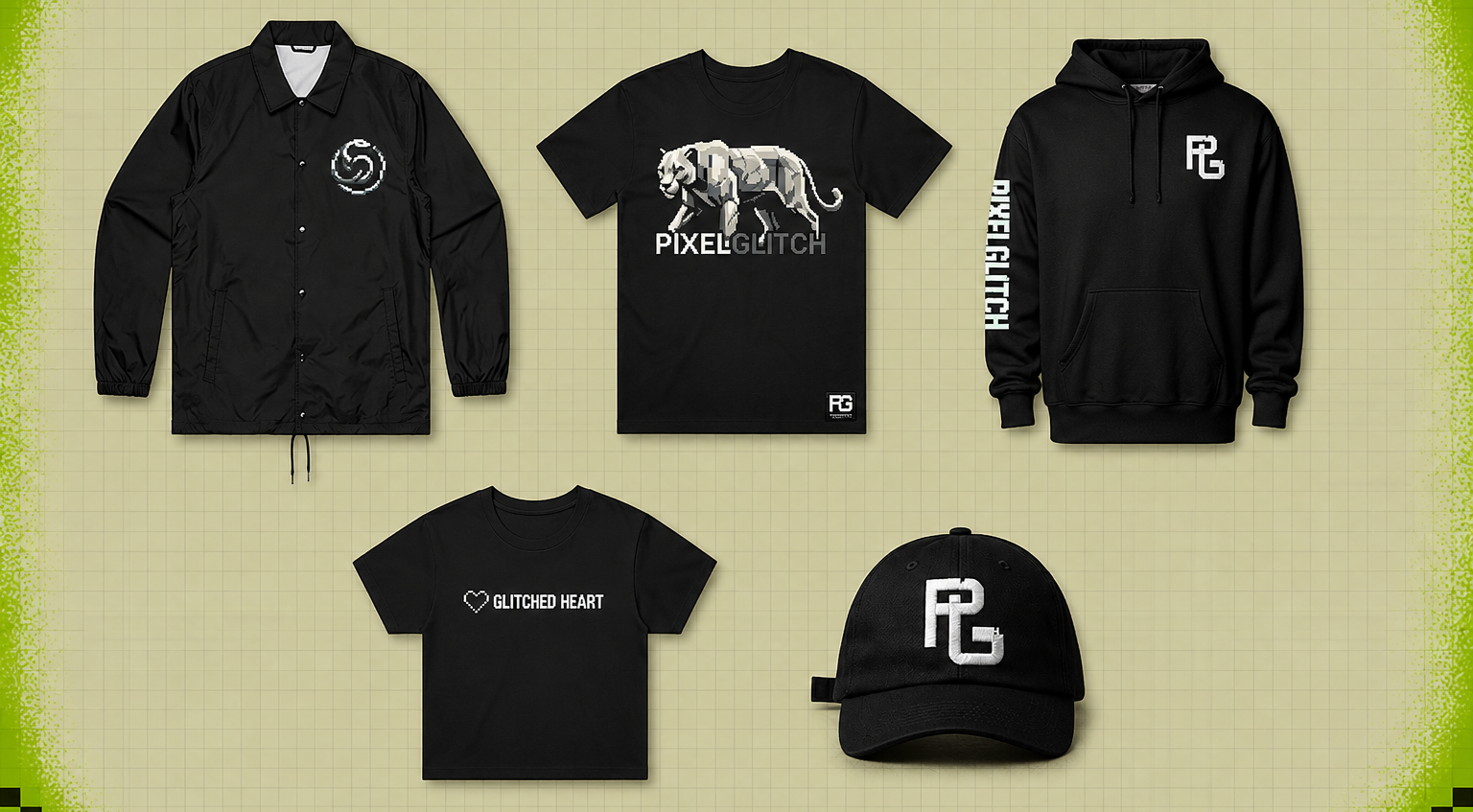
One of the hardest parts of starting a clothing brand is creating a memorable identity.
AI can help brainstorm:
- Brand names
- Slogans
- Taglines
- Brand voice
- Typography styles
- Logo directions
Instead of getting stuck for weeks, you can rapidly explore dozens of concepts.
Full Word Logos
AI works especially well for generating typography-based logo ideas. You can experiment with serif, gothic, futuristic, handwritten, or distressed styles before moving into final production.
4. Create Minimal Brand Marks and Symbols
Not every logo needs a full wordmark.
Many successful clothing brands use simple symbols, icons, or minimal brand marks that become instantly recognizable.
AI image tools can help you generate:
- Monograms
- Abstract symbols
- Mascots
- Emblems
- Luxury-inspired icons
- Minimal geometric logos
This is especially useful for:
- Hat embroidery
- Woven labels
- Neck tags
- Rubber patches
- Minimal chest branding
Keep the final version clean and scalable for embroidery or print production.
5. Use AI to Generate Artwork for Apparel
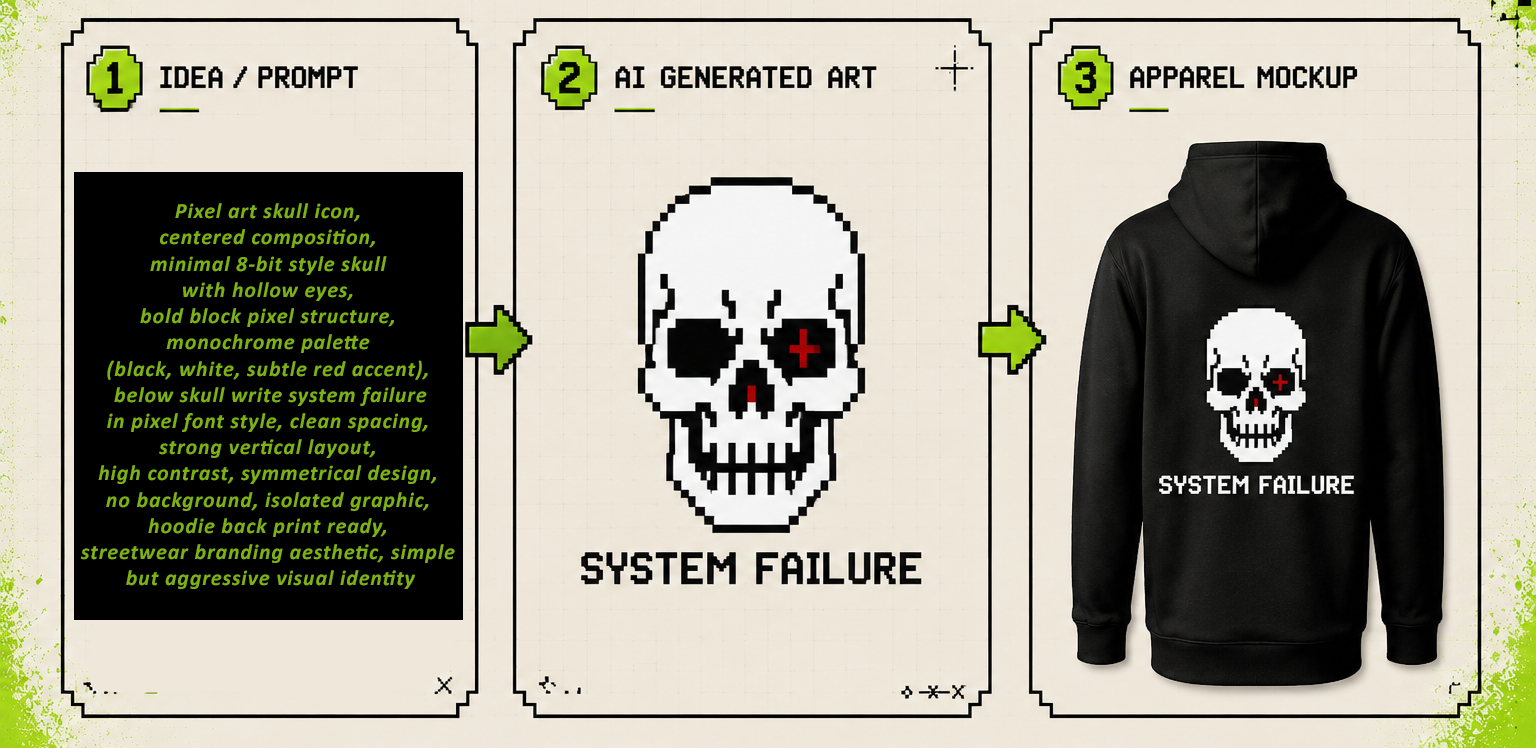
This is where AI becomes incredibly powerful for fashion brands.
Tools like ChatGPT, Claude, Gemini, and image-generation platforms like Luvart can help generate:
- Graphic tee concepts
- Vintage-inspired artwork
- Anime-inspired designs
- Typography layouts
- Distressed graphics
- Album-cover aesthetics
- Streetwear visuals
- Tattoo-inspired artwork
But the key is not using raw AI output exactly as-is. The best brands use AI as a creative starting point, then refine the artwork into something original and brand-specific.
6. Create 3–5 Products and Test Before Scaling
One of the biggest mistakes new brands make is launching huge collections too early. AI allows you to validate ideas faster.
Instead of designing 40 products, launch:
- 3 graphic tees
- 1 hoodie
- 1 hat
Then test:
- Engagement
- Click-through rate
- Add-to-cart behavior
- Sales performance
This is where print-on-demand becomes extremely valuable.
With platforms like Apliiq, you can launch products without holding inventory while testing designs in real market conditions. That means less risk and faster iteration.
7. Use AI Scalers and Automation Tools
Once your brand gains traction, AI can help automate repetitive tasks.
This includes:
- Customer support
- Product descriptions
- Inventory forecasting
- Email segmentation
- Ad copy generation
- Data analysis
AI adoption in e-commerce is growing rapidly. According to ecommerce industry data compiled by EComposer, around 84% of ecommerce businesses are either already integrating AI or planning to adopt it, with major use cases including personalized recommendations, marketing automation, and virtual agents. (EComposer)
The key is using automation strategically instead of automating everything. Customers still want authentic brands with personality.
8. Create Marketing Assets in Minutes
Fashion brands constantly need content.
AI can help create:
- Email campaigns
- Instagram captions
- Product launch copy
- SMS marketing
- Ad concepts
- Product descriptions
- SEO blog outlines
This dramatically speeds up content production.
Reuters reported that LPP now uses AI to generate 80% of its marketing visuals, a shift the company says has reduced content production costs by 60%. (Reuters)
That doesn’t mean brands should stop being creative. It means smaller brands can finally compete with larger teams.
9. Design and Style Your Website Faster
Your website is your storefront.
AI tools can help with:
- Homepage copy
- Collection page layouts
- Product page descriptions
- Mobile optimization ideas
- UX recommendations
- Styling direction
- Conversion-focused headlines
You can even ask AI:
- “How should a luxury streetwear homepage feel?” (For brands targeting a premium market, our blog on how to create luxury pants for clothing brands explores what makes elevated apparel feel truly high-end. )
- “What sections improve conversion for fashion ecommerce?”
- “How should I organize a minimalist apparel store?”
This speeds up decision-making and helps newer founders avoid poor design choices.
10. Generate High-Quality Mockups Instantly
Mockups are critical for apparel brands. Before manufacturing products, you need realistic visuals for:
- Product pages
- Social media
- Ads
- Lookbooks
- Email campaigns
AI-generated mockups can help visualize embroidery placement, oversized graphics, sleeve prints, patch applications, streetwear fits, and lifestyle photography, letting you test product presentations before investing in photoshoots.
Pairing AI mockups with print-on-demand creates an incredibly lean launch strategy for modern clothing brands.
Why AI Matters for Fashion Brands Right Now
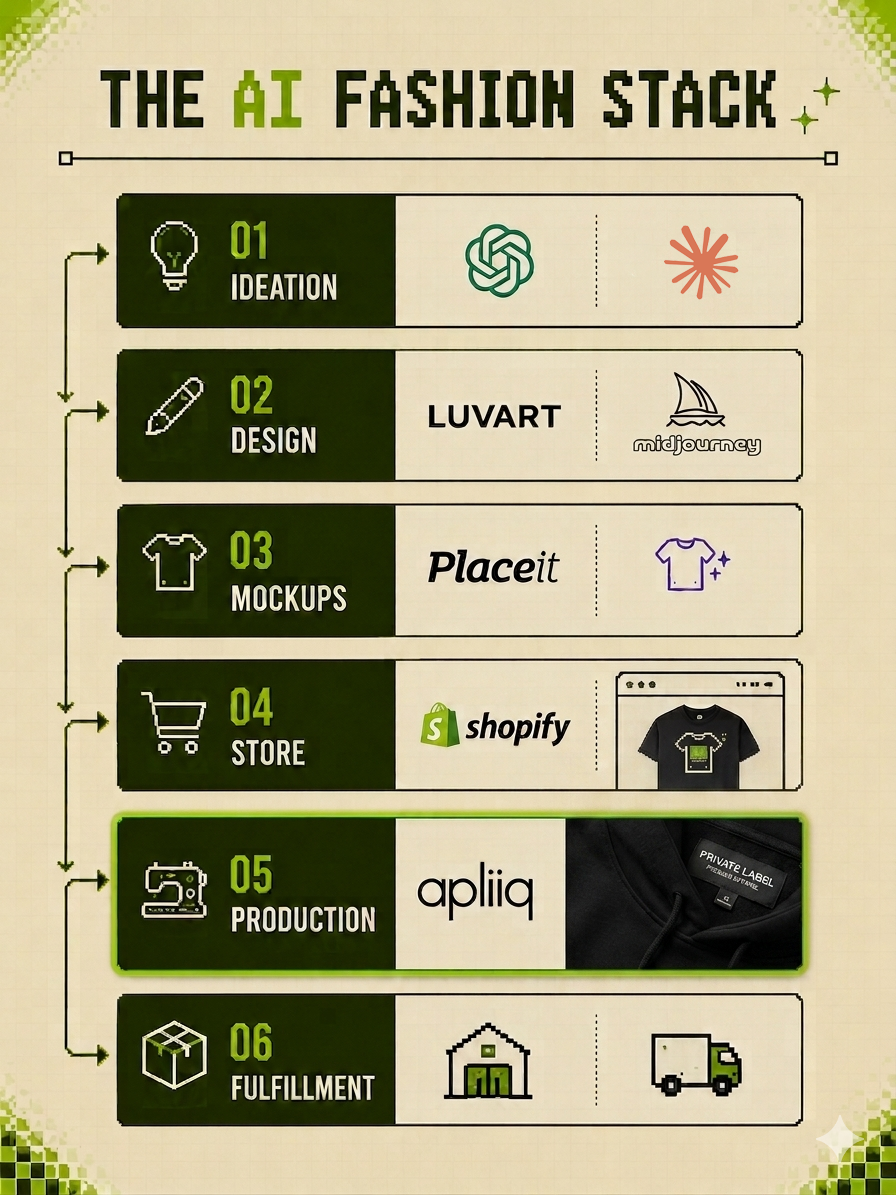
AI is not replacing clothing brands. It is removing bottlenecks. The brands growing fastest are using AI to:
- Move faster
- Research smarter
- Launch leaner
- Create more content
- Test products rapidly
At the same time, customers still care deeply about originality, storytelling, and authenticity. So the real winning formula is human creativity, strong branding, and AI-powered execution working together.
Final Thoughts
The biggest advantage AI gives clothing brands is speed.
Speed to test ideas.
Speed to create content.
Speed to research markets.
Speed to launch products.
But speed only matters if the brand direction is strong.
The brands that stand out in the next era of fashion will not be the ones using AI the most aggressively.
They will be the ones using it most intelligently. If you are ready to turn your concepts into real products, Apliiq helps clothing brands launch custom t-shirts and custom apparel with print-on-demand production, premium customization, warehousing, and fulfillment solutions built for scaling modern fashion brands.